2026-W06
#2026-W06
First time outside
This week, I finally took my Guest outside to test how it works on uneven terrain in exterior. I managed to set up a simple system for creating my own Wi-Fi access point on RPi so that I can control it from anywhere. So far, I've been doing it from my phone, but I'll have to get a controller. Touch feedback makes a huge difference.
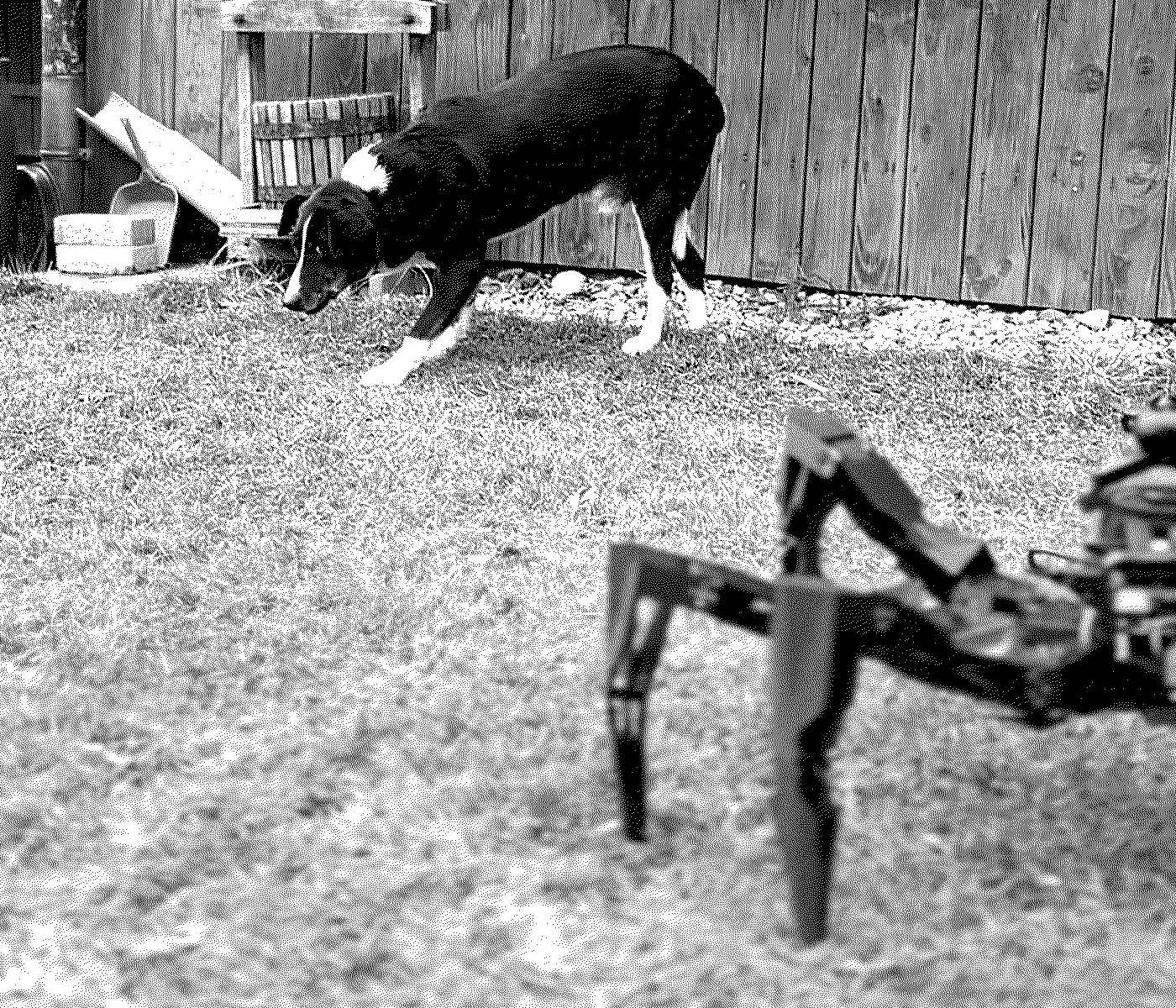
The robot is finally starting to get some interesting feedback from its surroundings. It even managed to scare our dog (see below), who wasn't exactly expecting it there. As soon as the machine started moving, the dog began to avoid it. Until then, however, he wasn't very interested in it.
Watch some footage from outdoors. and Robot's POV & Sound
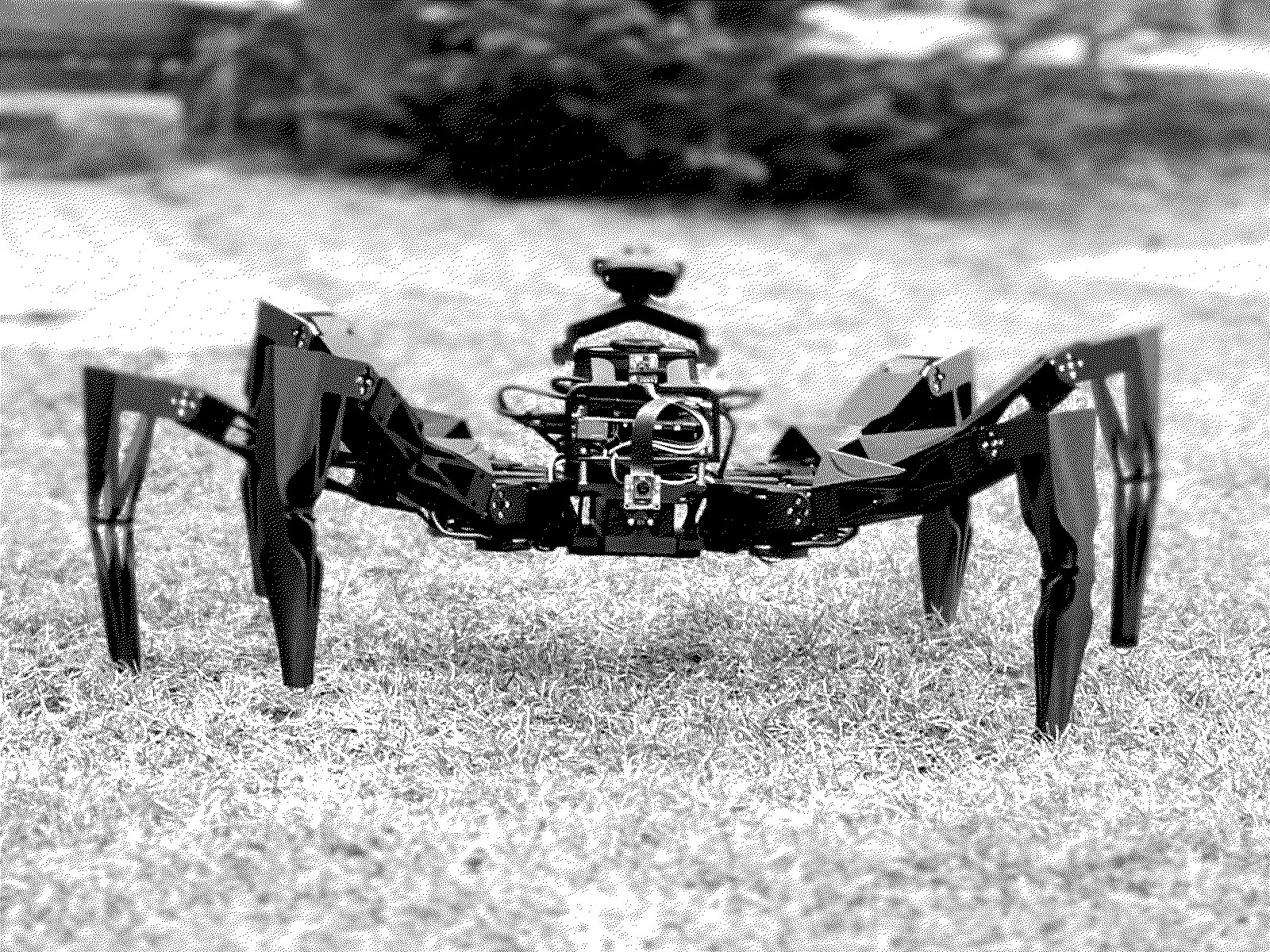
In terms of sound evolution, picking up the sound of servos via piezo seems to be the best method so far. It's extremely sensitive and can detect any touch or collision. So far, I've implemented a simple patch that analyzes the audio signal and plays a part of the selected sample as soon as it exceeds a certain threshold. With a few nodes, I was able to achieve a similar effect to Neural Audio Synthesis, as mentioned in my previous email.
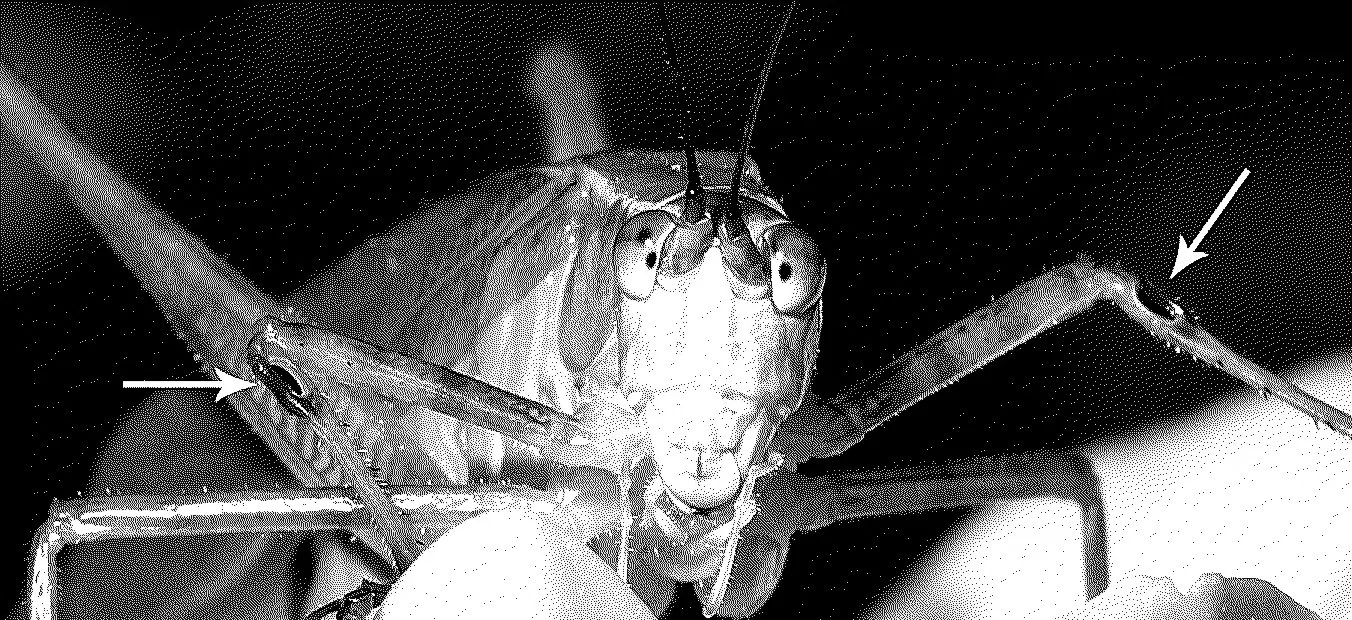
At the same time, this is closely linked to conceptual thoughts about what kind of sound such a machine should actually produce. Since its form is quite similar to the anatomy of an insect, I decided to approach it from the perspective of sound as well. Many insects do not hear with localized ears, but with mechanoreceptors distributed across their legs and exoskeleton. Similarly, my robot perceives vibrations using piezoelectric elements mounted directly on the motors and uses its entire body as a listening membrane.
I am still researching, but this might be a good overview; "Biology of Insect Song"
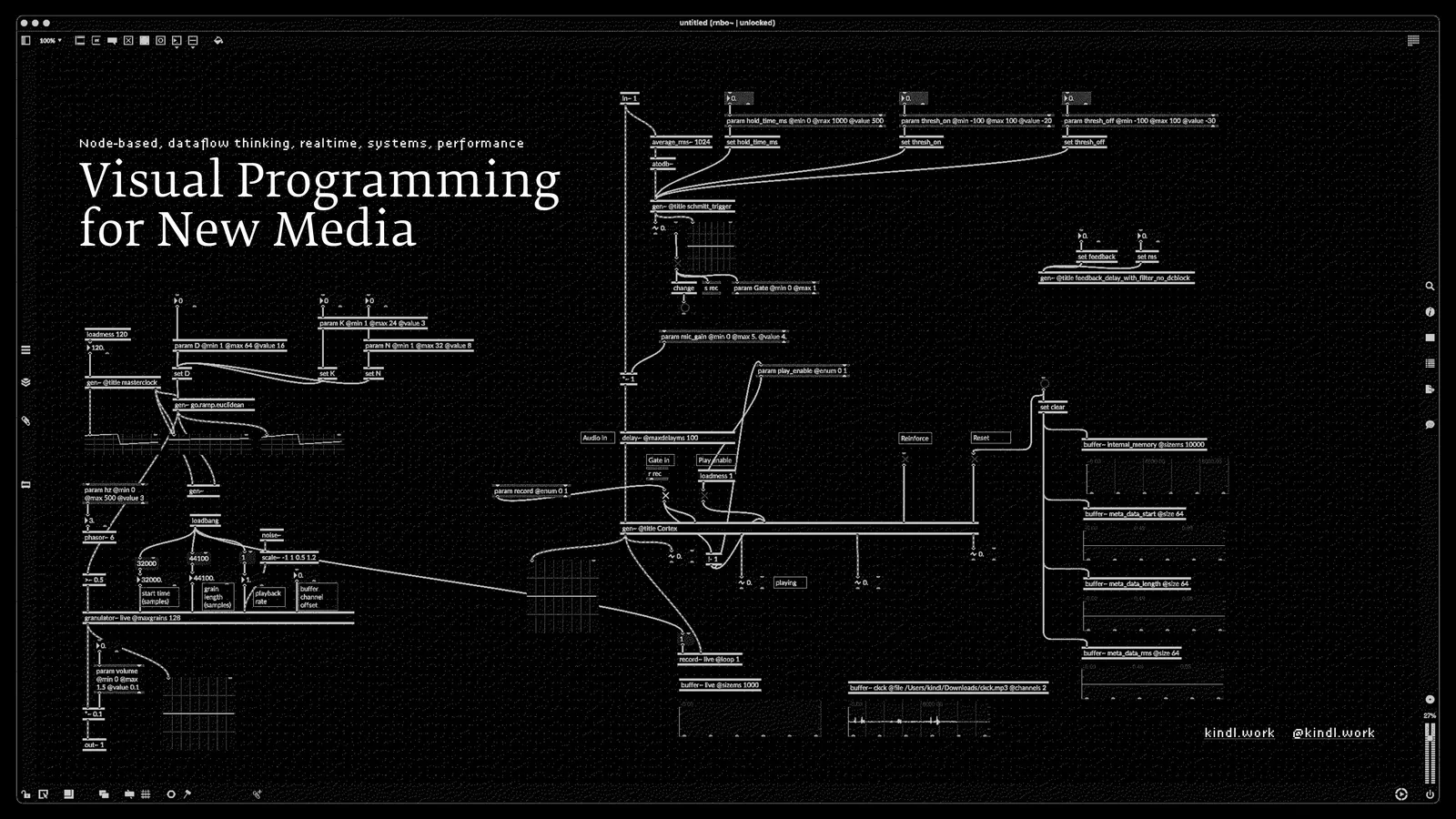
Visual Programming Resource
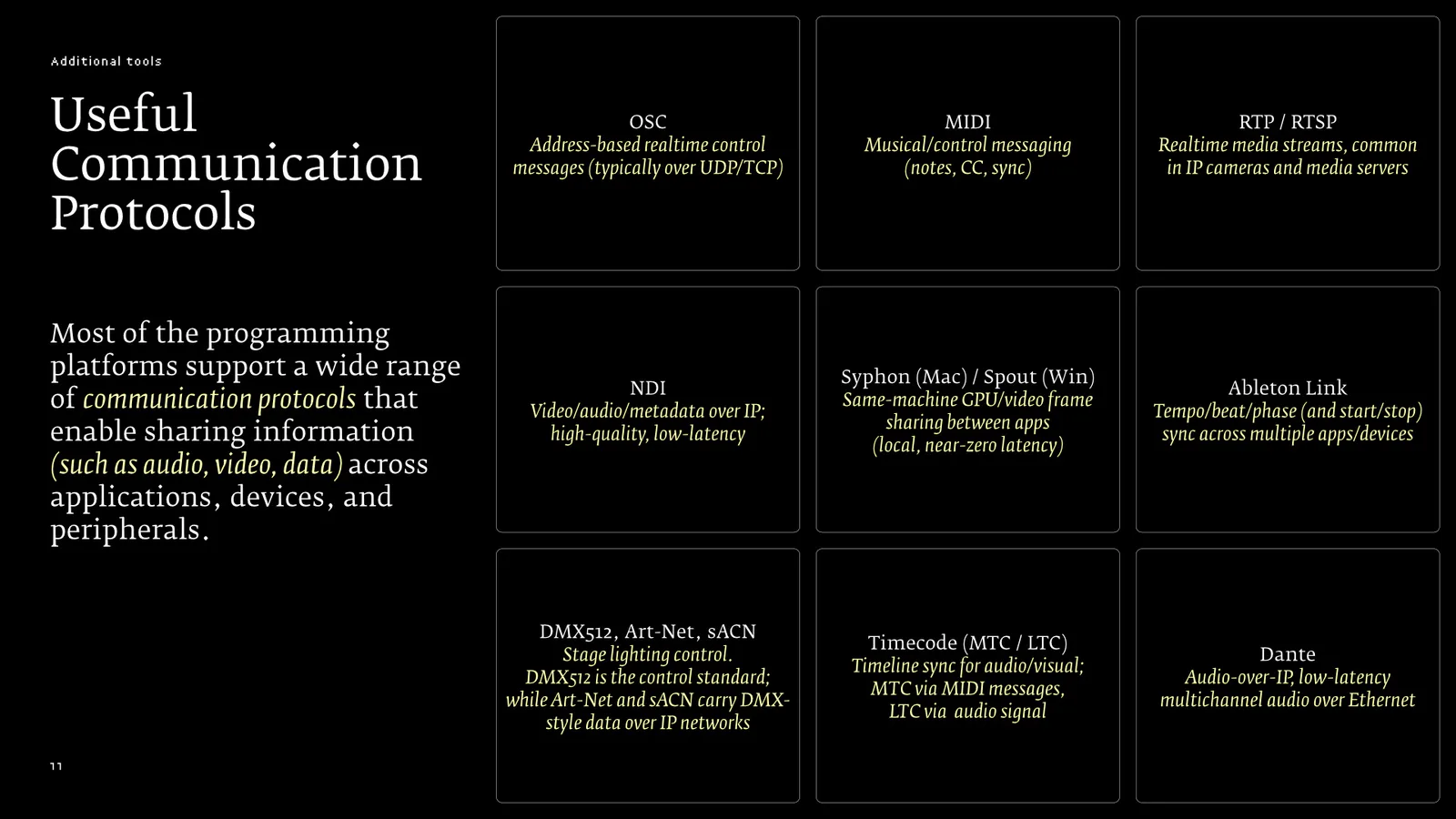
This week, during my V2.lab residency, I gave a small workshop on visual programming for new media creation. The presentation covers the tools I typically use, benefits and tradeoffs of node-based programming, comparison of major platforms like Max/MSP, TouchDesigner, Pure Data, and others, plus some personal notes on when I reach for which tool. We also focused on the Max and Touchdesigner environments with several project examples and a deep dive in Max.
A lot of the stuff happened off-screen, but I'm sharing the presentation itself in case you find it useful. Whether you're just curious about visual programming or considering diving in yourself.
Get the presentation here or see it on my website for more context.
Claude Opus 4.6
Also, Claude Opus 4.6 was released. After trying many models and platforms for coding and creative work, I can safely say that Claude offers the best value for my purposes, even though it is slightly more expensive. Minimal hallucinations and great debugging power and problem solving within Claude Code. Soon I would like to try Claude code with local models as well.
White-listing
Btw ! If you find this newsletter interesting in any way, I would be grateful if you could save my email address in your contacts so that it does not end up in your spam folder. Apparently, this has already happened somewhere, so if necessary, try this method, for example.