2026-W19
#2026-W19
Host T1 Build
I’ve finally completed the Host Tier 1 build I’ve been working on for the past month. I managed to reprint most of the parts and reconfigure the hardware so I wouldn’t have to rebuild the entire machine from scratch, so I’m still using the original board and components. Before I try to make my own PCB, I wanted to create a prototype version to fine-tune the last few issues in the overall build.
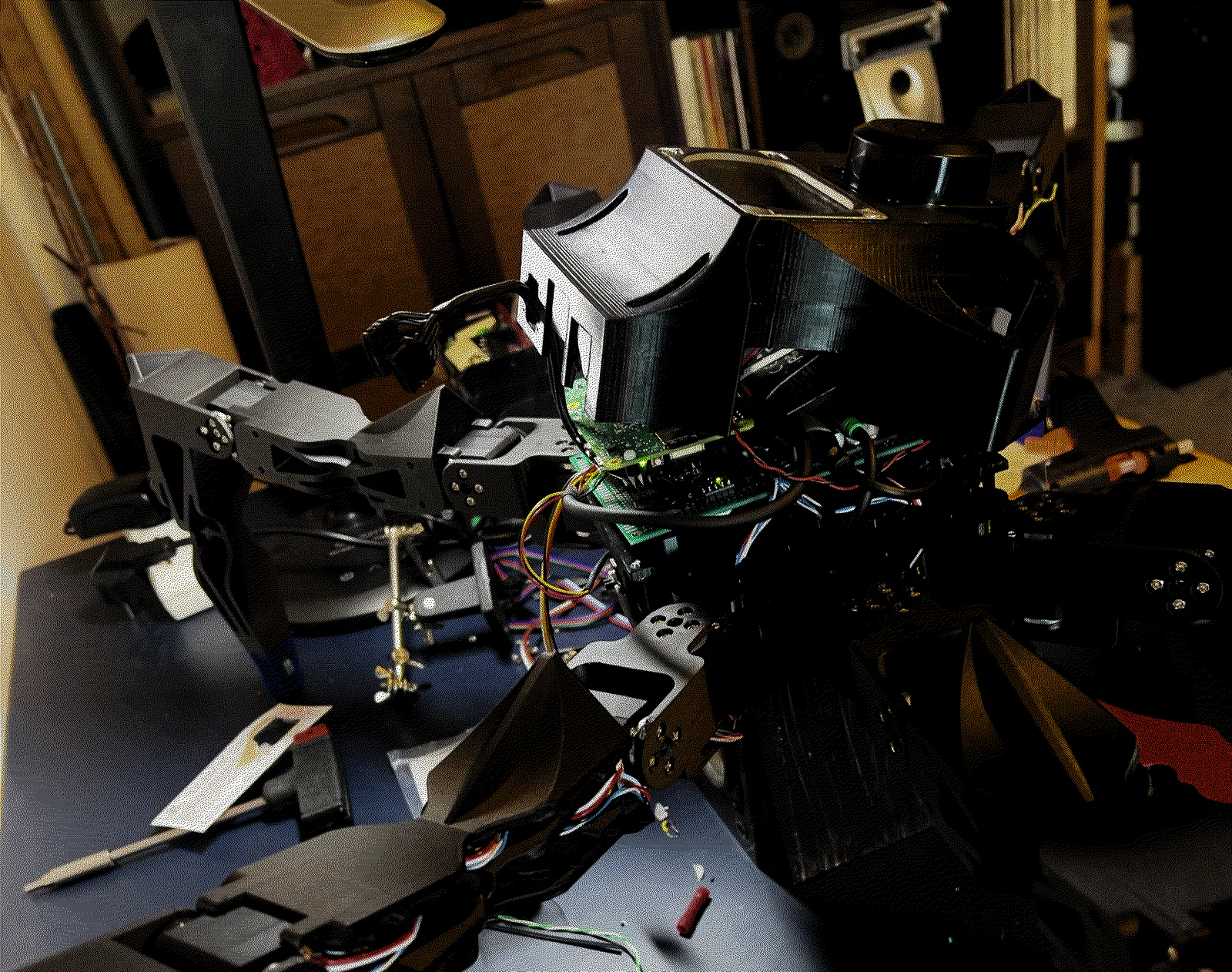
A rare glimpse into the internals of the machine
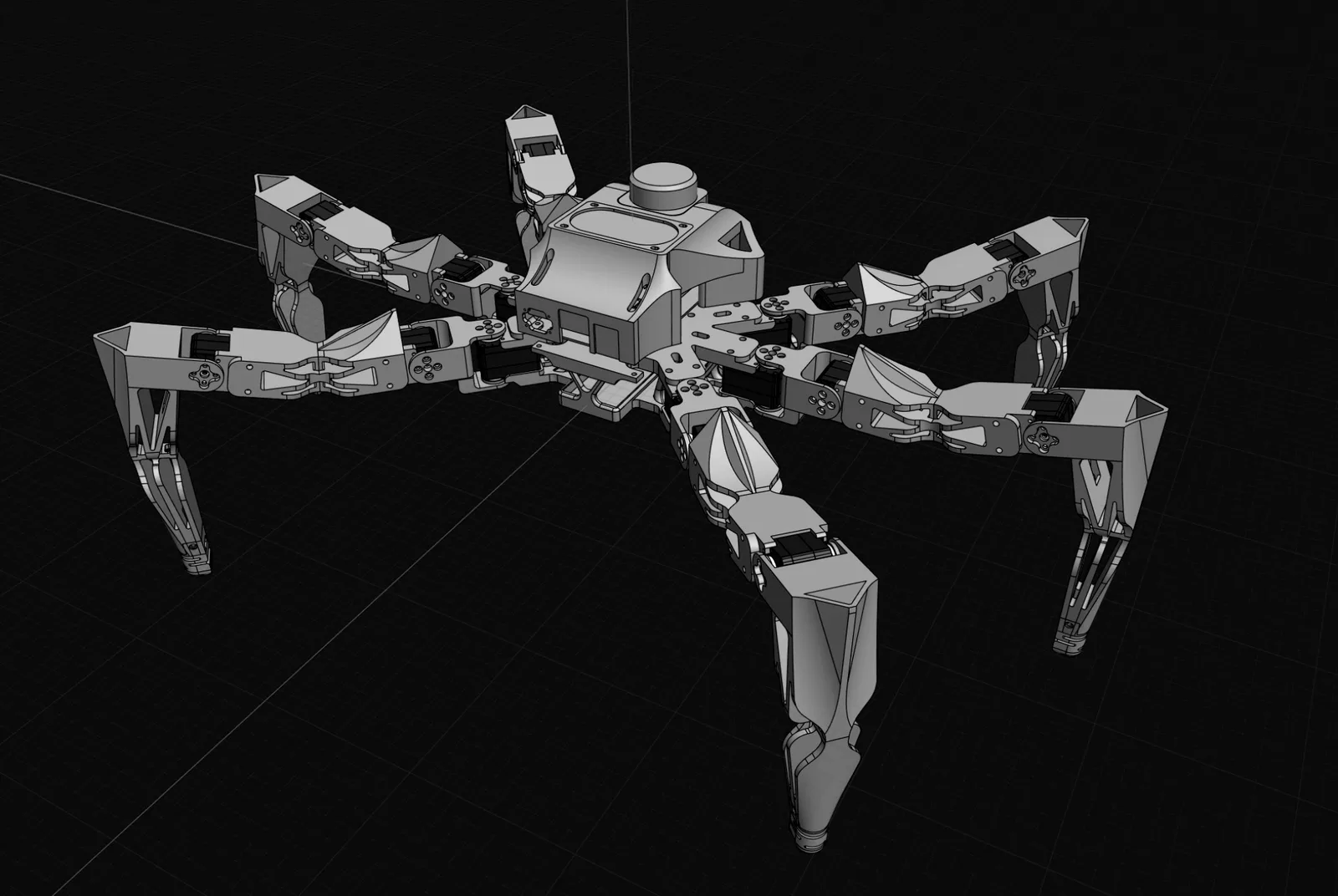
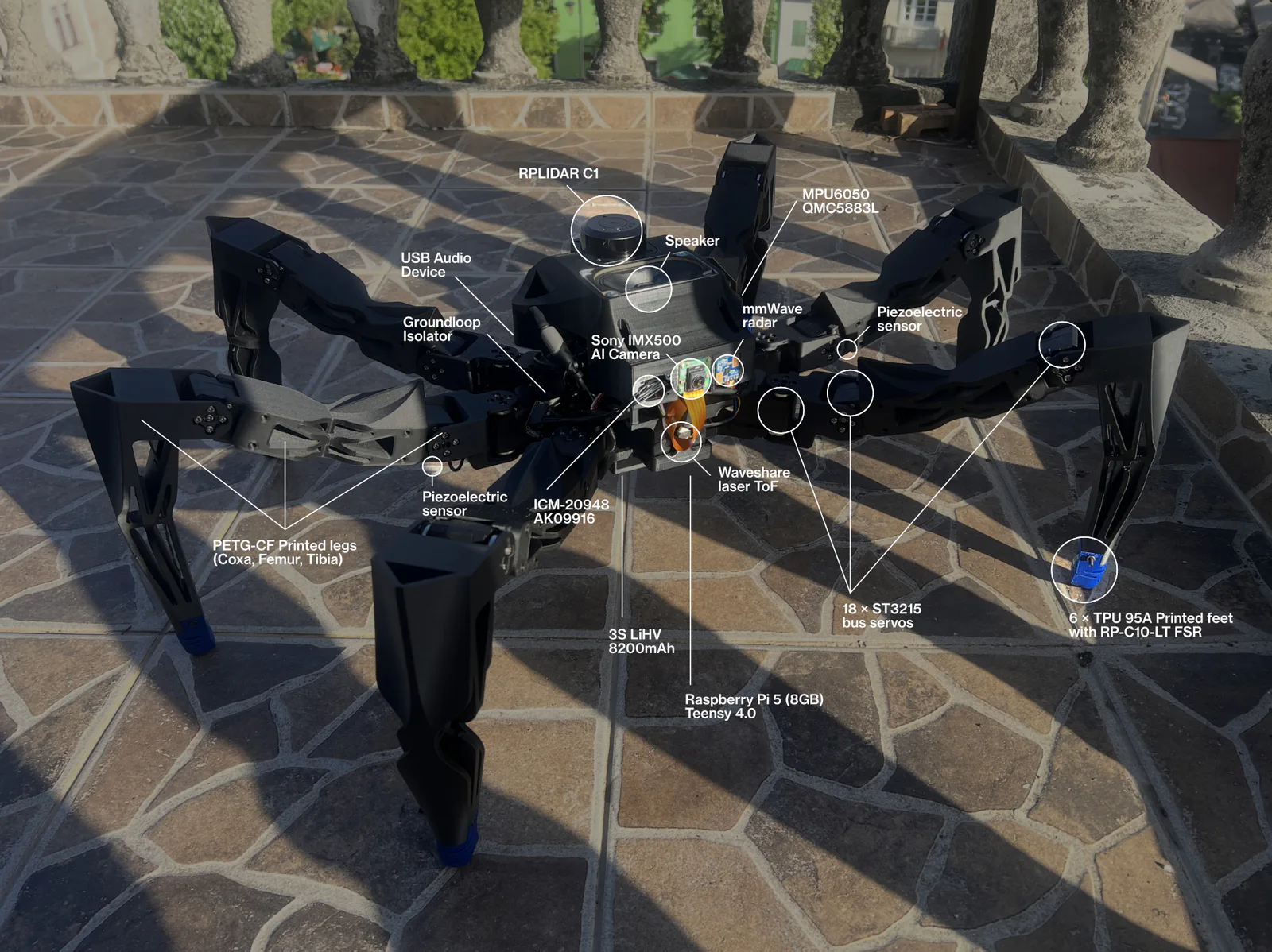
The biggest change is actually those barely noticeable new feet and their force sensors (FSR). I had to modify the design of the feet to route the cables, as well as the shape of the tips and the foot itself. I looked for a suitable material and settled on TPU 95A, shaped like a harmonica, which both absorbs shocks and (relatively) reliably presses against the sensor that registers touch. I have a feeling it will go through another revision, but for now it’s functional. From the perspective of the machine’s perception, the biggest new addition is the lidar, which allows for continuous scanning of the floor plan around the robot. As a result, it can walk much more safely and avoid obstacles. For the scan to be useful, the robot also needs to know which way it’s facing, so I added a 9-axis IMU (accelerometer + gyroscope + magnetometer) that gives it a stable sense of orientation.
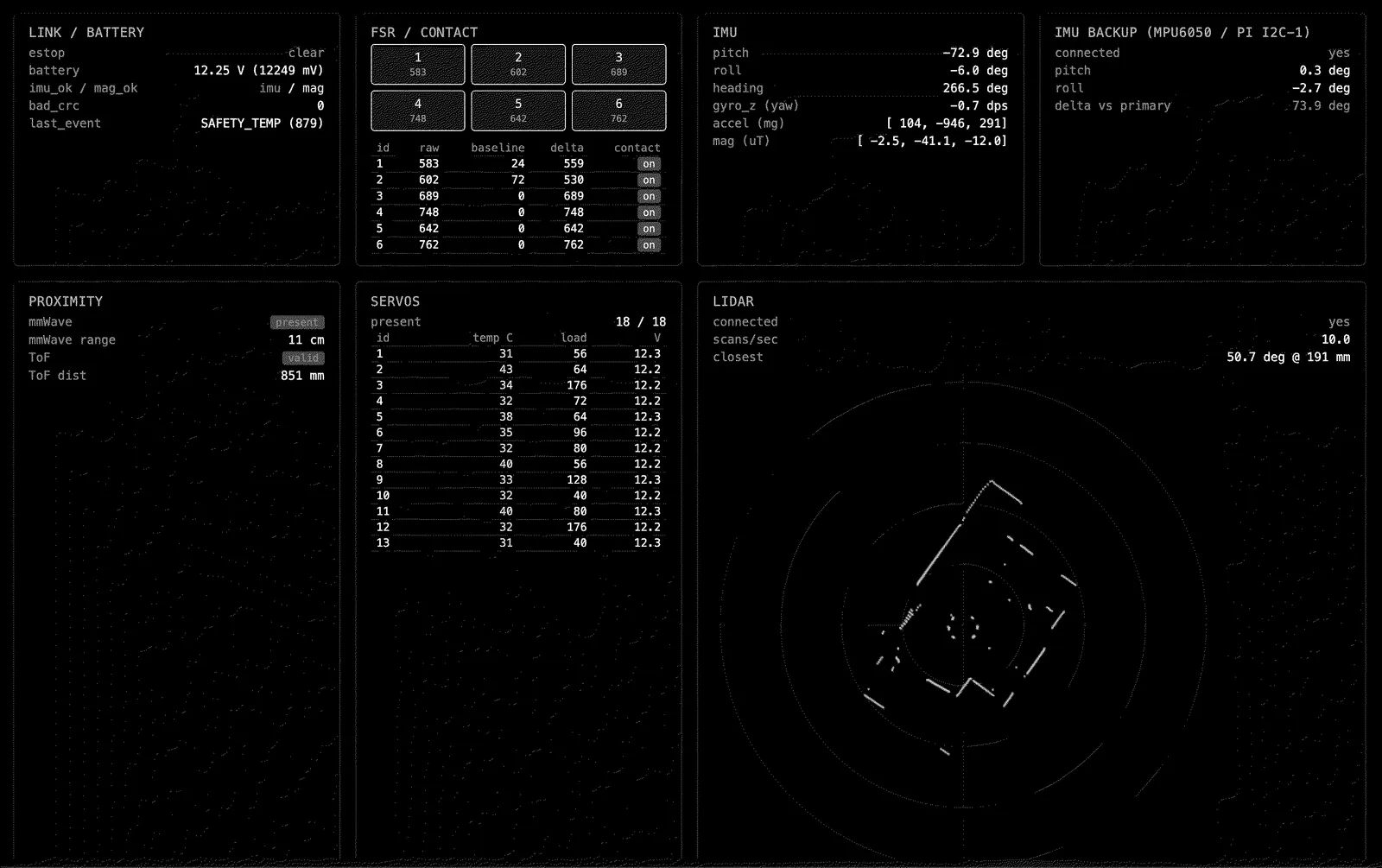
Realtime Web Dashboard ^
Speak, agent.
Another small experiment with my agent. I quite often find it more comfortable to speak than to type, especially when I’m describing something half-formed or when I work in the same time. For dictation I’ve been using Wispr Flow and the open-source OpenWhispr; both turn speech into clean text in any field on the system. The new addition is the other direction: a local text-to-speech wrapper built on top of Kokoro (a small open-source model, English only) that lets the agent read its answers back to me. There’s something weirdly pleasant about that, the back-and-forth feels closer to a real conversation than pure text. I’ve also started using it to narrate longer deep-research reports while I work on something else. Every spoken message gets archived as a timestamped MP3 in a local folder, so I can scroll back and replay anything later.