Machine Embodiment
Navigation: System_Process | Research Question | System (Keywords)
Related: Uncanny Valley | Machine Point Of View | System_Robots Research | System_Evolution Theory
Machine Embodiment
Created: 2025 — Location: Banská Bystrica
Collaborators: MediaLab*, Divadlo Štúdio Tanca
Medium: Performance Event Visual Sound
Project Description
Machine Embodiment explores the relationship between human and machine through performance, investigating how physical presence transforms our perception of artificial agents. The project examines the boundary between tool and actor through direct bodily interaction with robotic systems.
Key Questions
- How does embodied interaction change our relationship with machines?
- What happens when human gestures directly control robotic movements?
- Can we experience machine "perspectives" through our own bodies?
Performance Elements
- Real-time control of robotic limbs through human movement
- Gestural mapping from performer to machine
- Feedback loops between human intention and machine response
- Audience observation of human-machine coupling
Theoretical Framework
Embodied Cognition
Drawing from theories that cognition emerges from body-environment interaction:
- Intelligence is not purely computational but situated in physical experience
- The body is not merely hardware for the mind but an active agent in perception
- Machine intelligence may require embodied experience to achieve genuine understanding
Tool vs. Actor
The performance reveals a crucial transformation:
- With direct control: Machine perceived as extension/tool of human
- Without human input: Machine perceived as autonomous actor
- Transition moment: The shift in status is immediate and striking
Observations
Human-Machine Coupling
When performer directly controls robotic movements:
- Reduced distance between human and machine
- Sense of extension rather than separate entity
- Shared agency in the resulting actions
Autonomous Operation
When machine acts independently:
- Immediate status change to autonomous actor
- Unpredictability becomes a key factor
- Anthropomorphic attribution of intentions
Audience Response
Spectators show different reactions to:
- Coupled operation: Focus on human performer
- Autonomous operation: Focus shifts to machine as independent entity
- Switching between modes: Highlights the constructed nature of agency
Connection to System Project
This performance work directly informs the broader System project by:
- Testing embodiment theories in practice
- Exploring human-machine boundaries through direct experience
- Investigating perception of machine agency in real-time
- Understanding the role of physical presence in artificial systems
Technical Implementation
Hardware
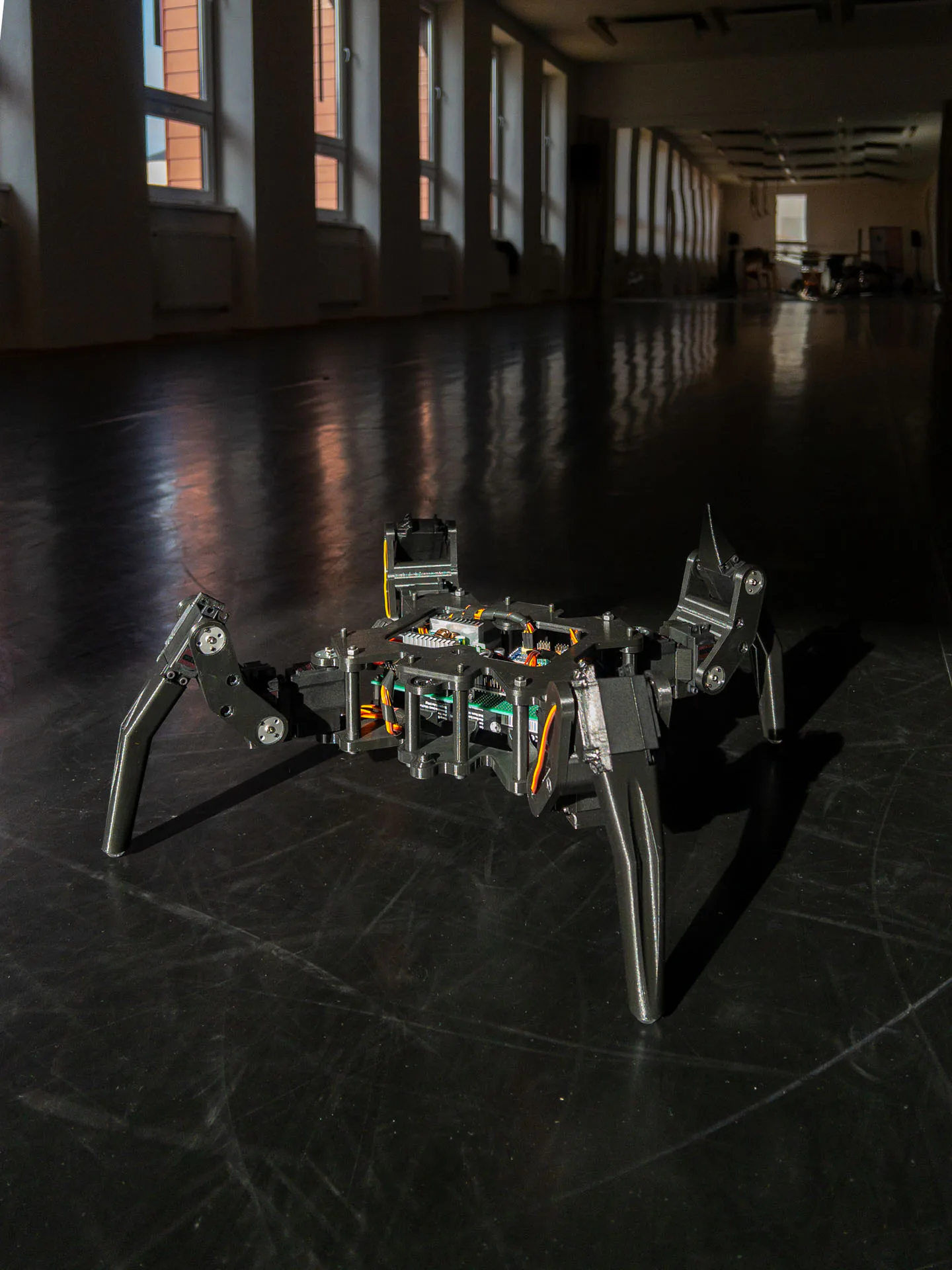
- Custom robotic limbs and actuators
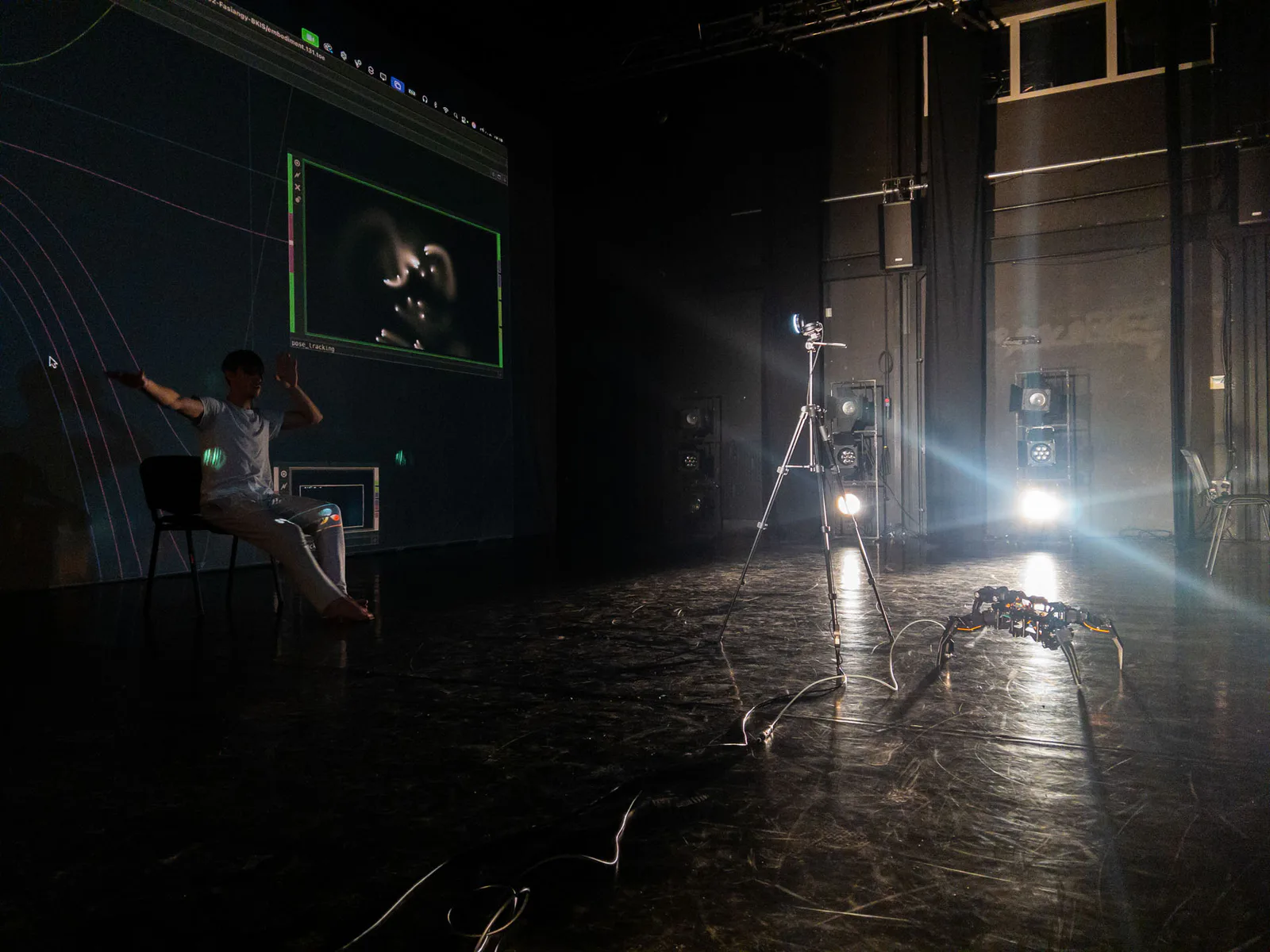
- Motion capture system for gesture tracking
- Real-time processing for movement mapping
- Wireless communication protocols
Software
- Real-time gesture analysis
- Inverse kinematics for robotic control
- OSC communication between systems
- Performance data logging
Media Documentation
Video
Images
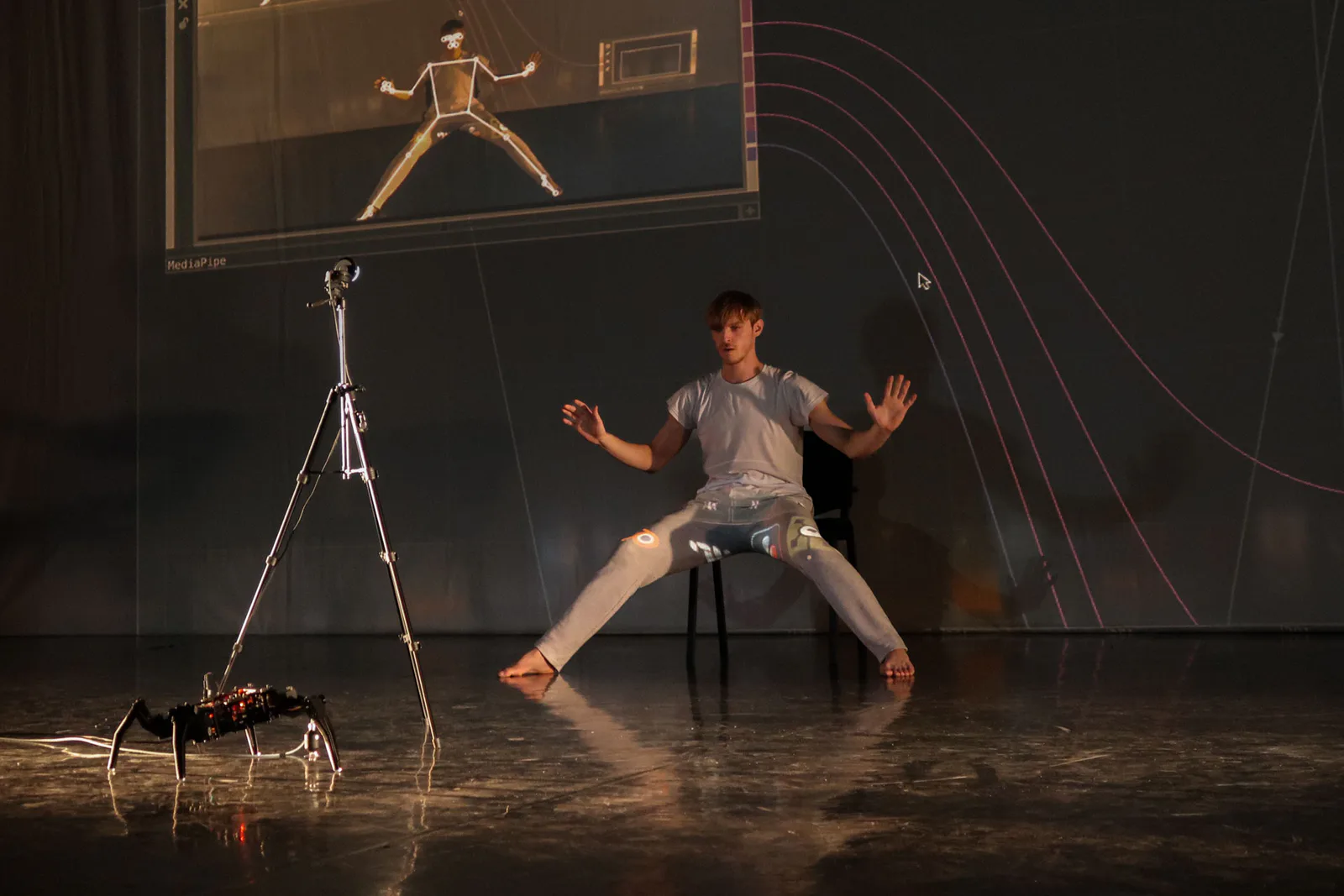
Performance setup showing human-robot interaction
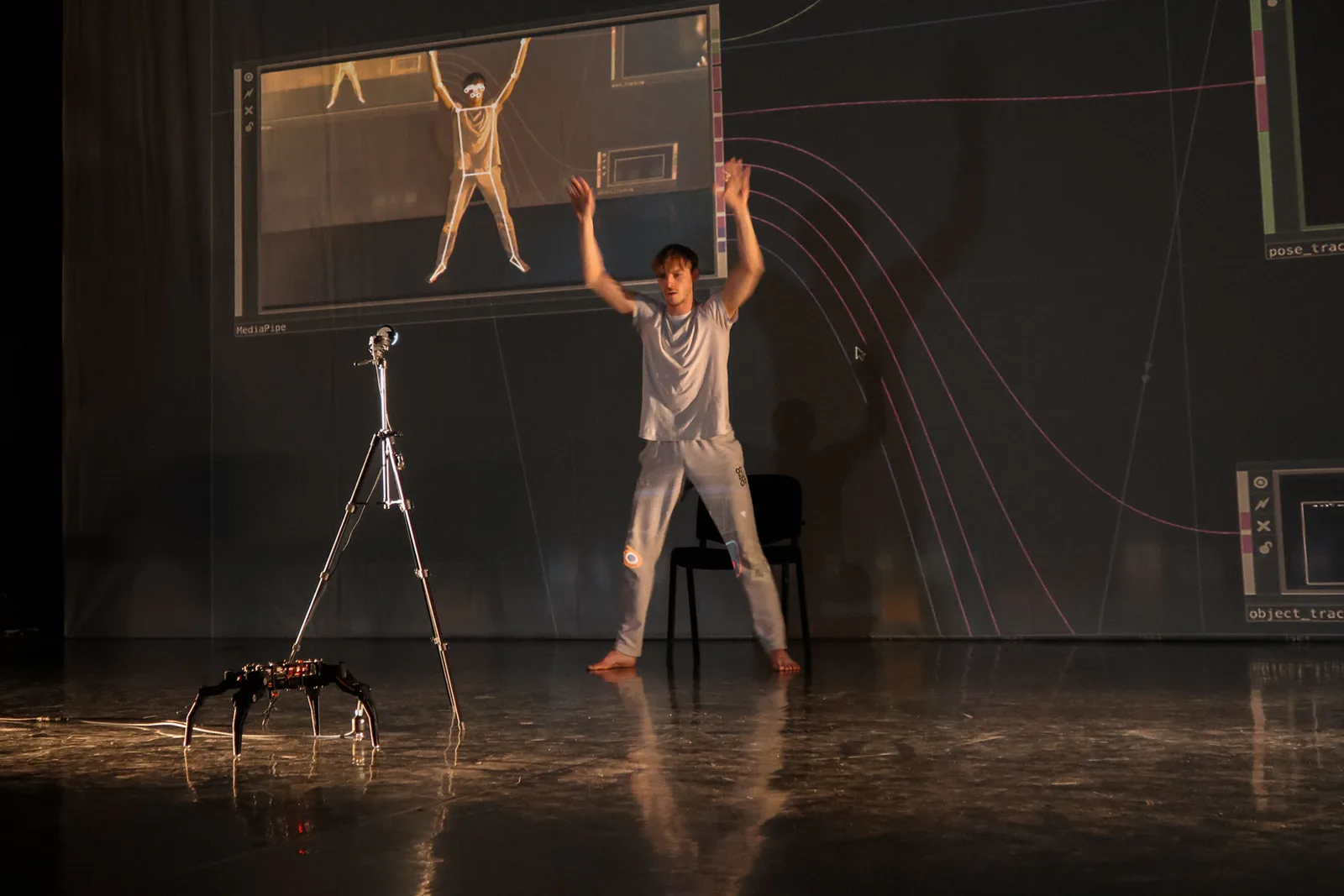
Audience observing the coupling between performer and machine
Robotic limb responding to human gesture
Detail of robotic mechanism
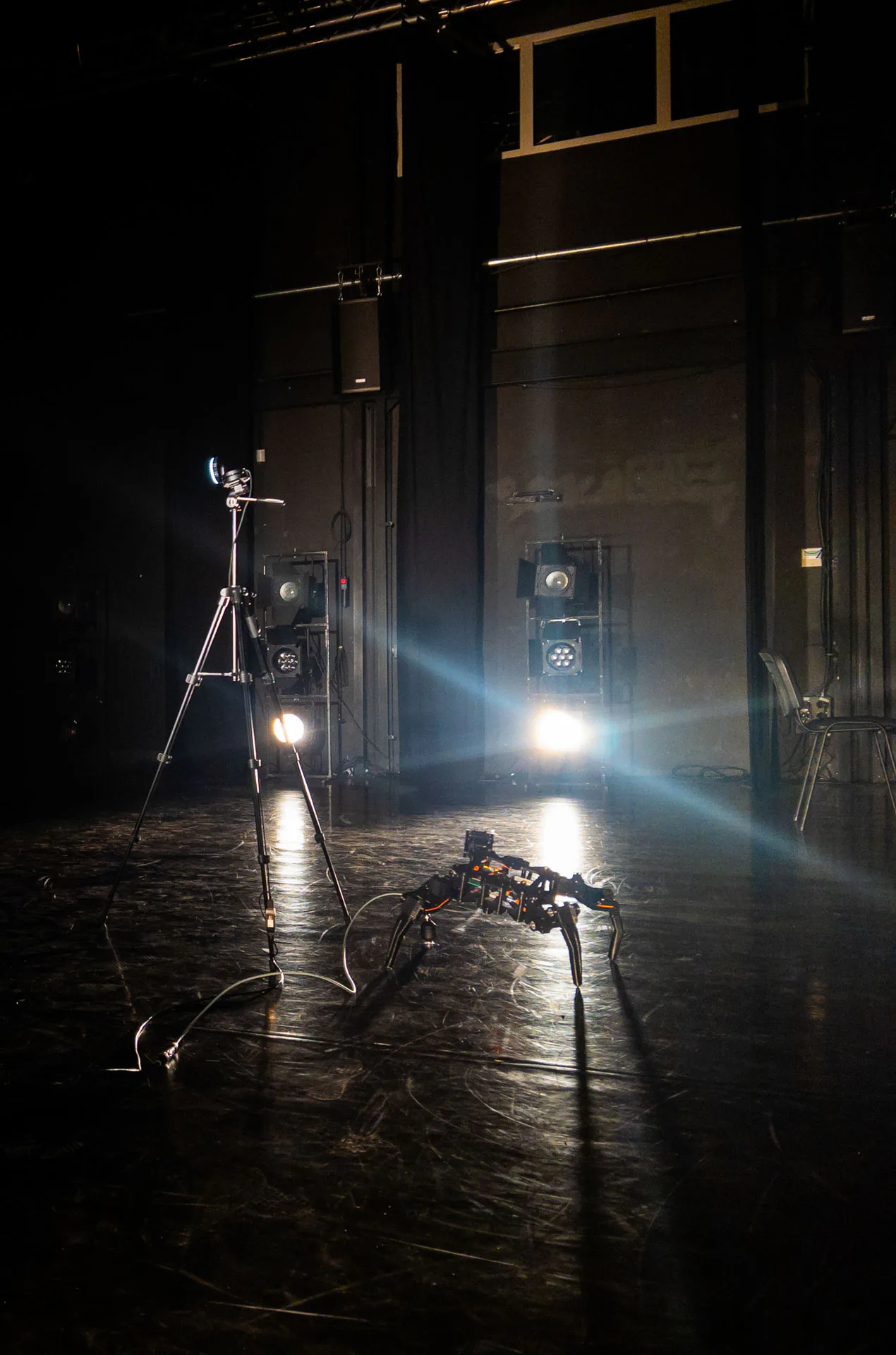
Real-time gesture mapping in action
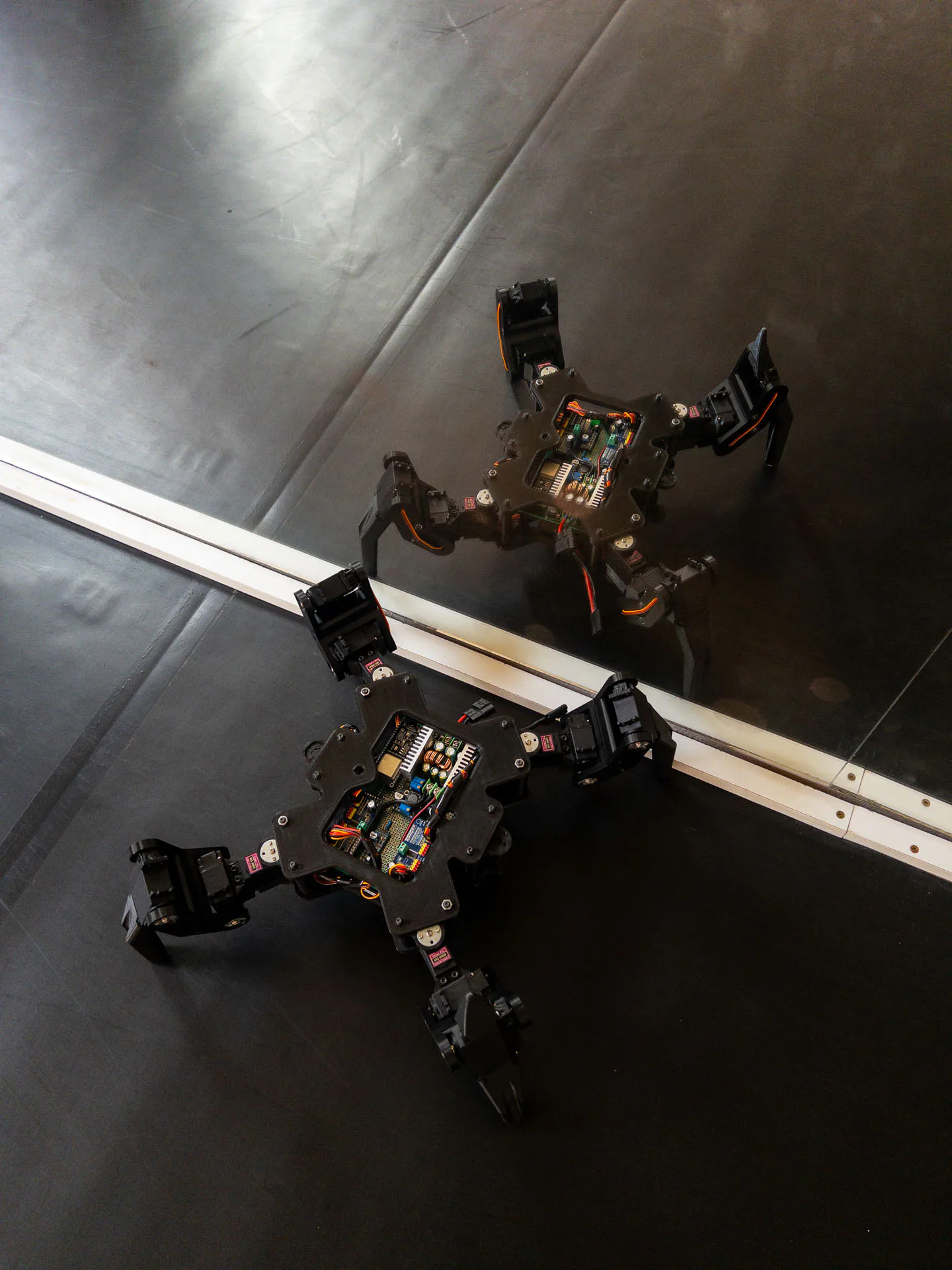
Performer controlling multiple robotic elements
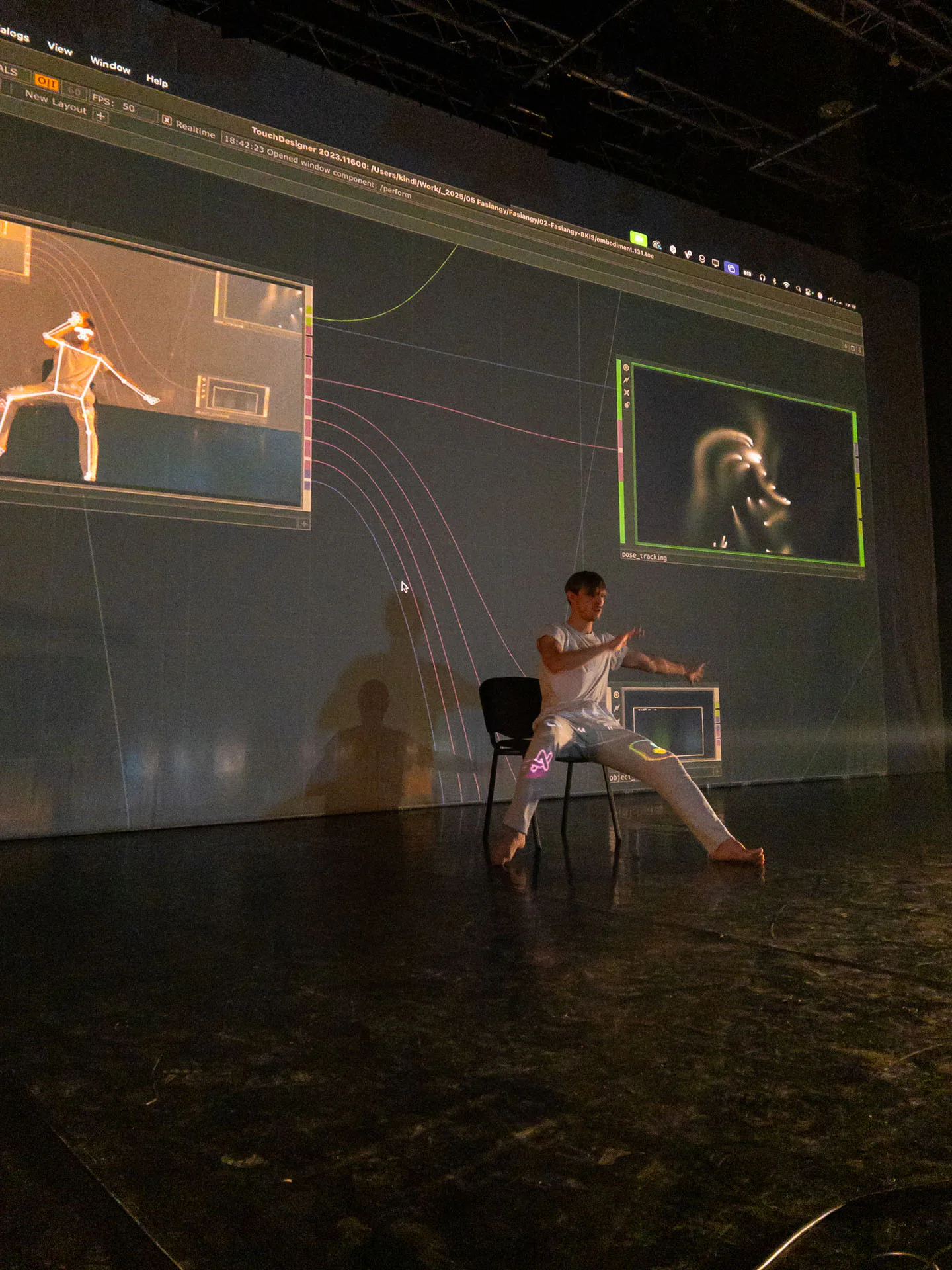
Machine operating autonomously
Performance Log
[This section could include dates, venues, audience feedback, technical notes, etc.]
See also: System_Process | System_Robots Research | System_Evolution Theory