Uncanny Valley
Navigation: System_Process | Research Question | System (Keywords)
Related: Machine Embodiment | Machine Point Of View | System_Robots Research
Resources: Wikipedia
Uncanny Valley
Definition
The Uncanny Valley is a hypothesis in robotics and cognitive psychology that describes the unsettling feeling humans experience when encountering robots or digital beings that appear almost, but not exactly, like real humans.
Key Characteristics
The Valley Effect
- Low similarity to humans → comfortable/neutral response
- High but imperfect similarity → discomfort, revulsion, eeriness
- Very high similarity → positive response again
Psychological Response
The phenomenon suggests that as robots become more human-like, our emotional response becomes increasingly positive until a point where small imperfections become deeply disturbing.
Historical Context
Origin: Japanese roboticist Masahiro Mori (1970) Original term: bukimi no tani (不気味の谷) Translation: "Valley of eeriness" or "uncanny valley"
Relevance to System Project
Design Philosophy
The System project's "electronic organisms" deliberately avoid human-like appearance, instead:
- Embracing non-human morphologies
- Exploring alternative forms of embodiment
- Creating entities that are clearly artificial yet autonomous
Avoiding Anthropomorphism
By designing machines that don't mimic human form, the project:
- Sidesteps uncanny valley responses
- Allows focus on autonomous behavior rather than appearance
- Explores genuinely alien forms of machine intelligence
Related Phenomena
Anthropomorphism
Humans naturally attribute human characteristics to non-human entities, especially those that:
- Move autonomously
- Respond to stimuli
- Appear to have goals or intentions
Emotional Attachment
Studies show that humans develop emotional bonds with robots, even simple ones:
- Military personnel holding "funerals" for destroyed battle robots
- Users feeling empathy for damaged or threatened robots
- Hesitation to harm anthropomorphic machines
Design Implications
For Robotics
- Consider target audience and context
- Balance functionality with appearance
- Be aware of cultural differences in acceptance
For Interactive Art
- Use uncanny responses deliberately for artistic effect
- Explore discomfort as meaningful aesthetic experience
- Challenge assumptions about human-machine relationships
Visual Reference
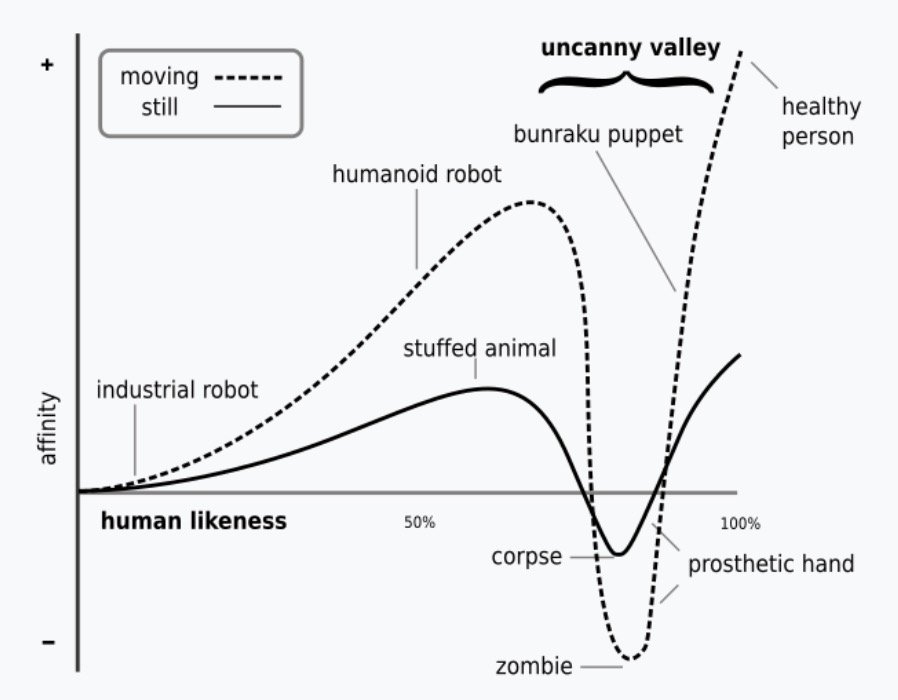
Figure: Graph showing the relationship between human likeness and emotional response, illustrating the "valley" of negative response
See also: Egon Bondy | The Chinese Room Argument | Turing test